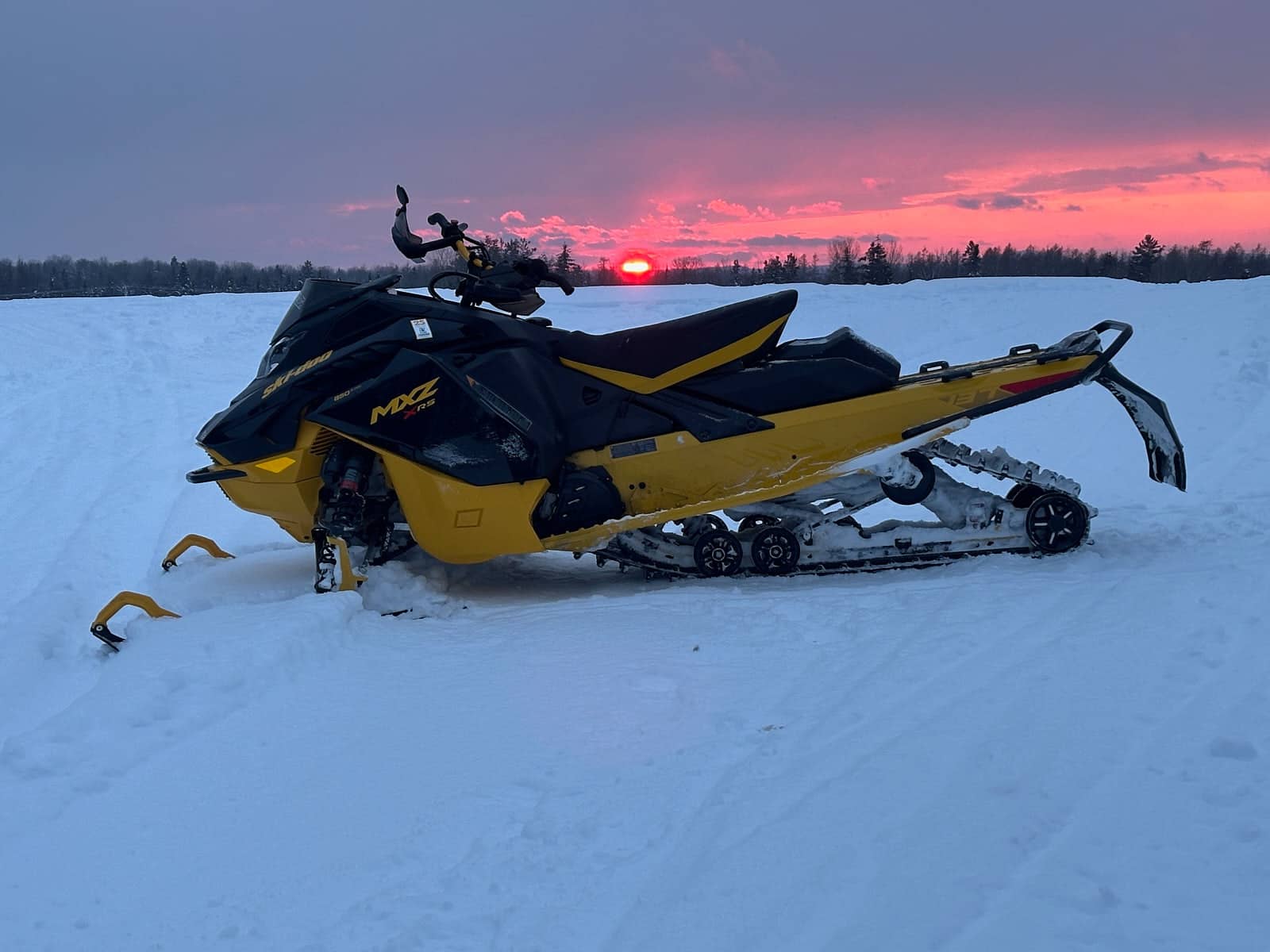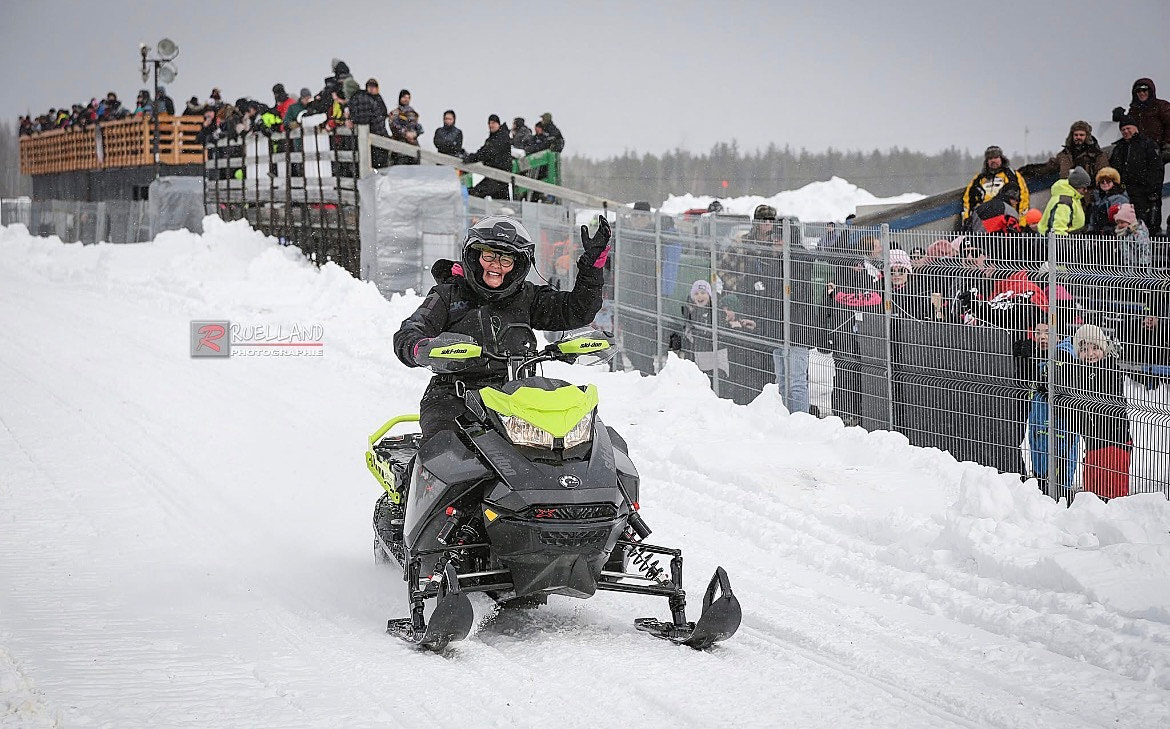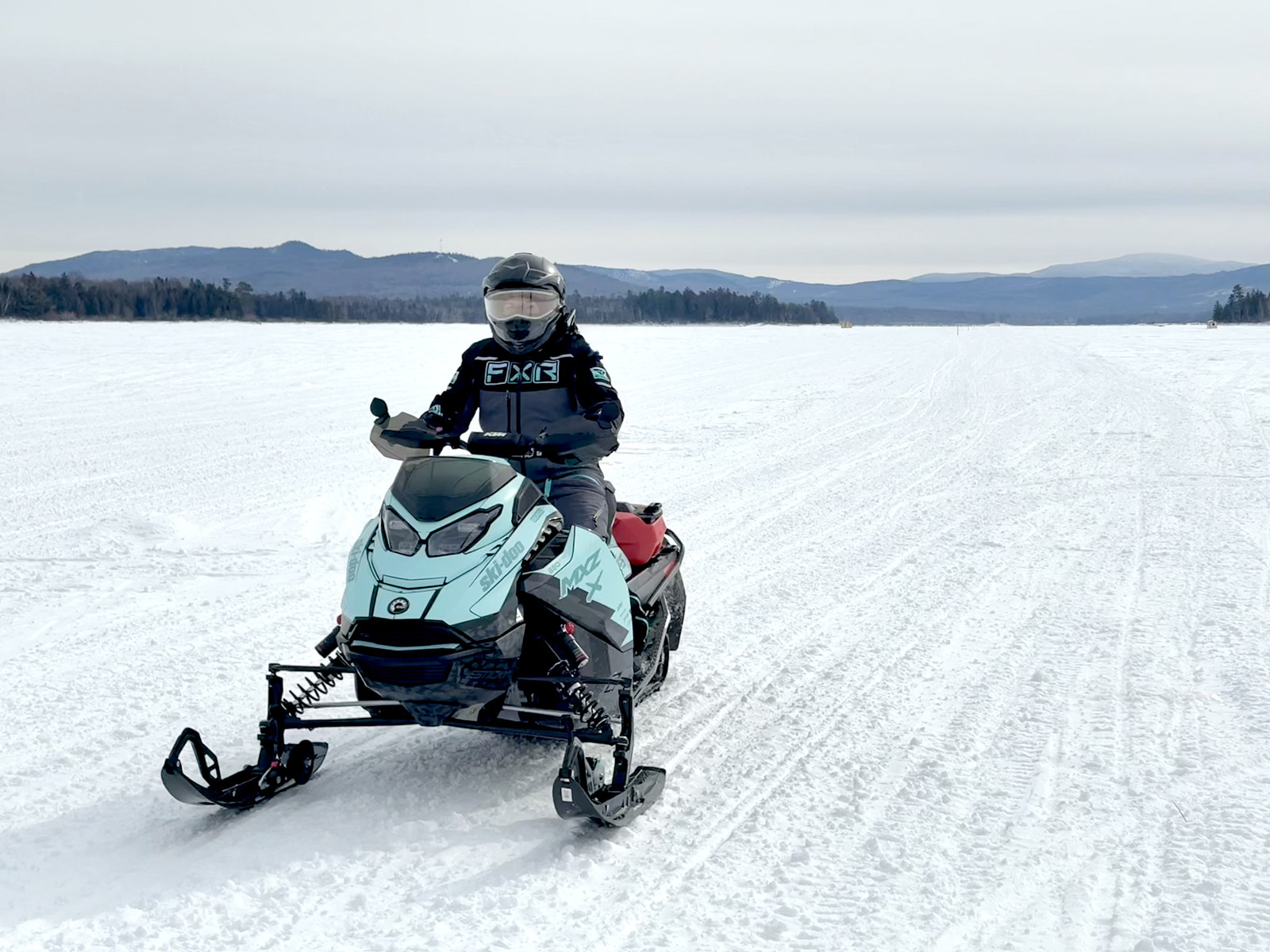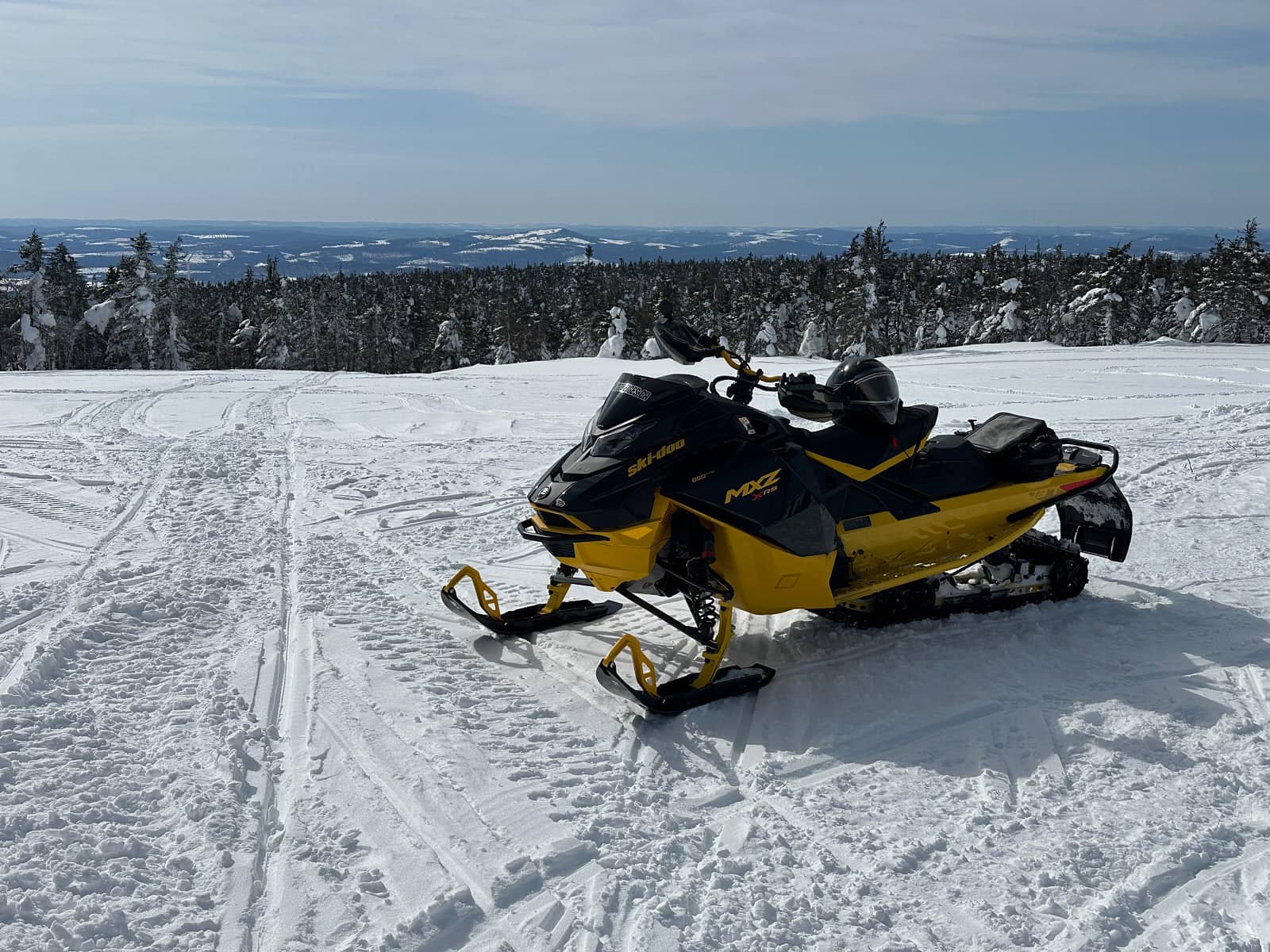
As I write this article, the season has come to an end in my region. The trails officially closed this week. We had a lot of snow this year. After a back injury that kept me off the trails for a month, I definitely wasn’t able to enjoy the final stretch of the season as much as I would have liked. Even so, with nearly 2,000 km logged on the snowmobile, I still had ample time to get a solid understanding of its behaviour. It’s time to share my final review of the 2025 Ski-Doo MXZ X-RS 850.
Engine and CVT Performance of the Ski-Doo MXZ X-RS 2025
This 850 cc engine and its continuously variable transmission (CVT) have long ranked among my favourites in the industry since their introduction. The engine delivers an almost instantaneous response and strong acceleration. Its weight certainly helps. It’s a combination that has been in place for several years and continues to perform very well.
Whether in terms of sound or vibration, this is on another level. After all these years, I believe Ski-Doo has reached a refinement that’s hard to beat with the behaviour of this two-stroke engine.
Chassis and Stability of the MXZ X-RS 2025
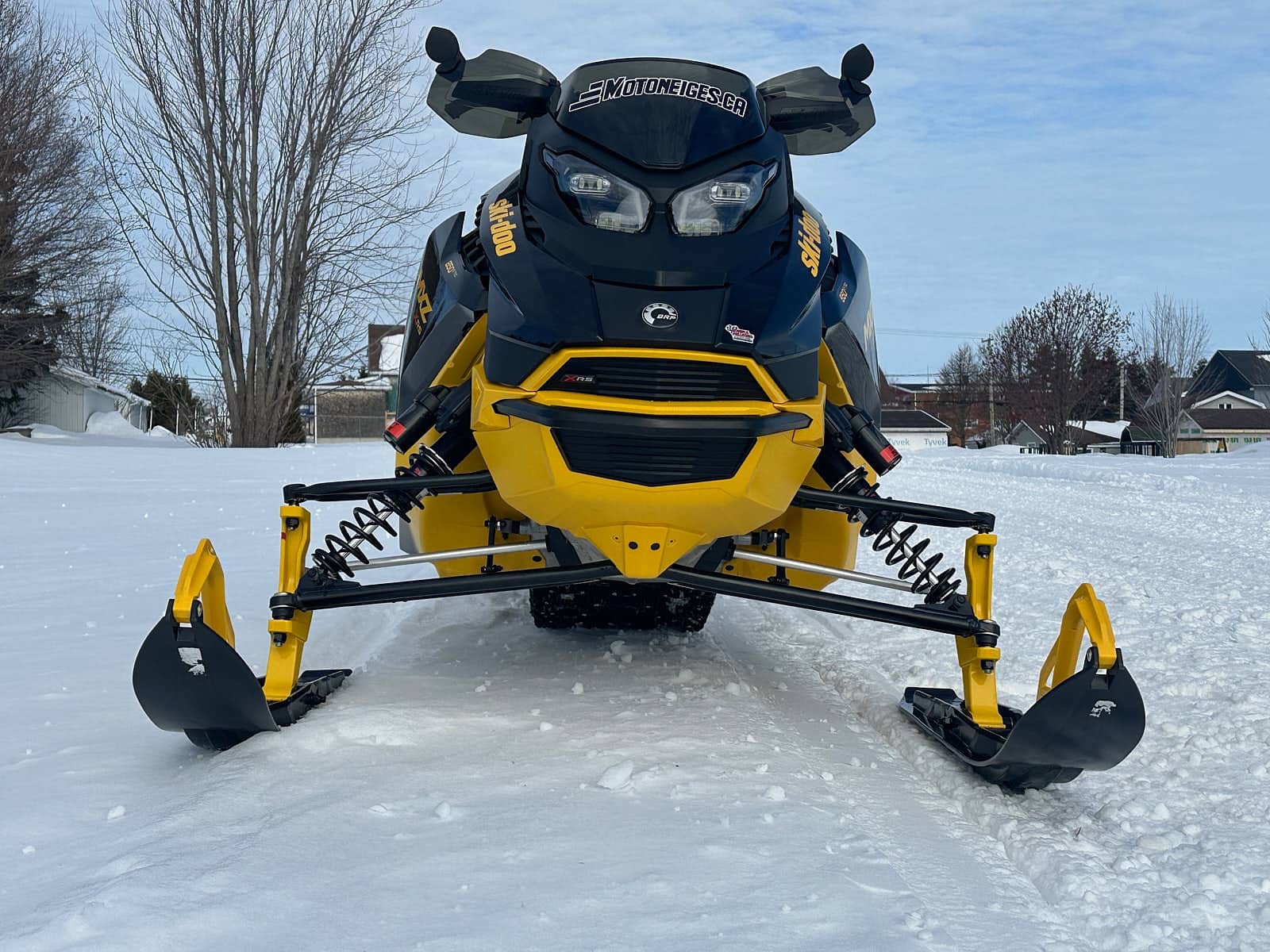
The chassis behaviour this year was particularly noteworthy. I must first mention that I observed significantly less body roll compared to past seasons. The combination of the lightweight two-stroke engine, the new RAS RX front suspension and the semi-active Smart-Shox shocks made a clear difference. My snowmobile generally stayed more planted on the trail, especially in corners.
With Sport Plus mode, the snowmobile leaned much less in turns and was also more stable in end-of-day bumpy trail conditions. The only setting where the behaviour was slightly less predictable was, as expected, the Comfort mode. Of course, that’s not the primary purpose of this setting. Still, I feel the behaviour of Comfort mode has also improved over the past few years.
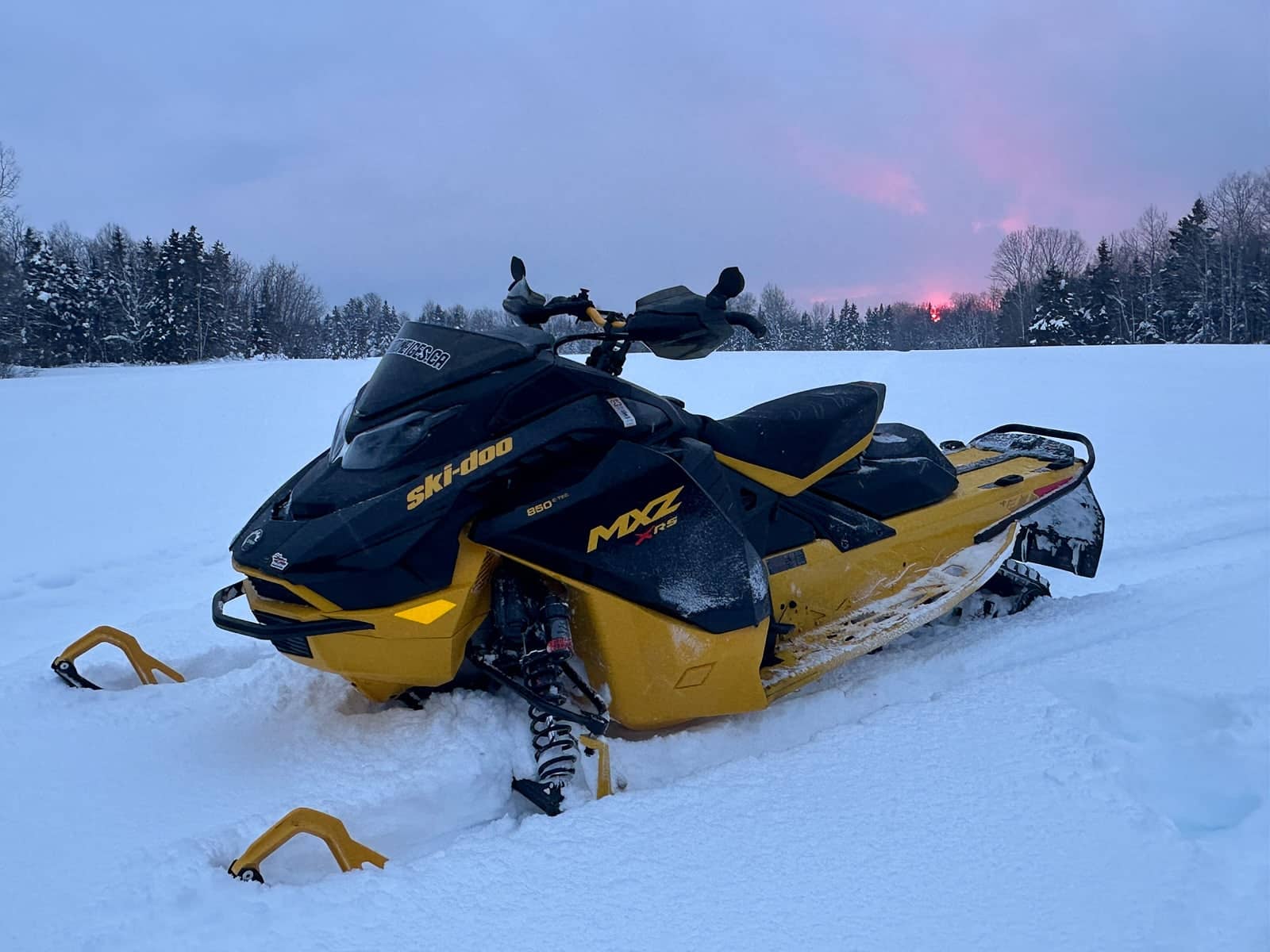
In summary, there’s far less lateral push than before, and much less than with a four-stroke snowmobile due to the weight difference. This is precisely why I prefer the overall behaviour of a two-stroke machine: that sense of control and lightness.
RAS RX Front Suspension: Behaviour and Precision
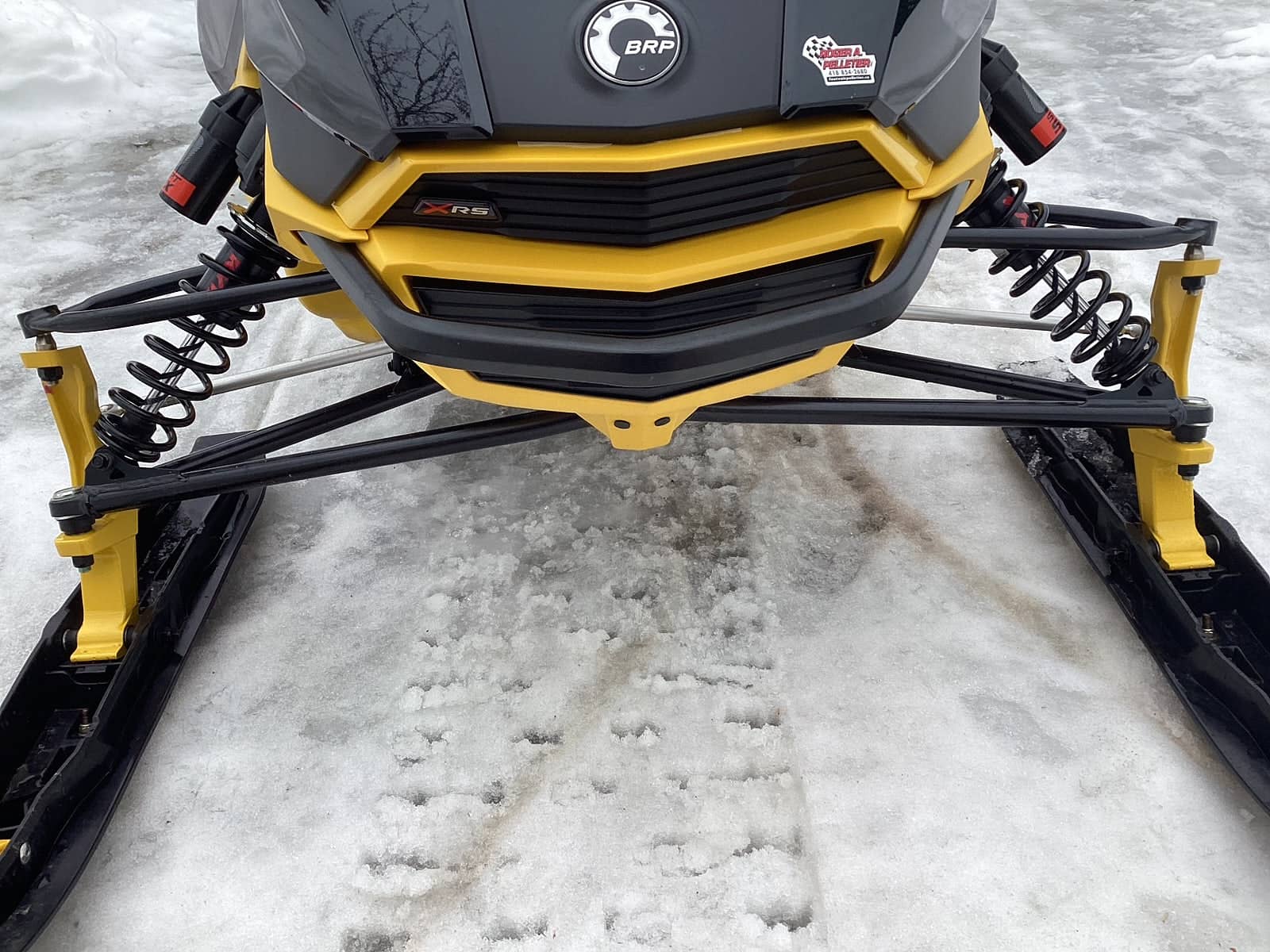
I was genuinely impressed by this new front suspension. I can confidently say I’ve never had this much control over the handlebars of any other Ski-Doo snowmobile. I also noticed the skis lifted far less often than with the previous-generation chassis.
The thing I appreciated most throughout the season was how predictable the snowmobile behaved. I found that the front end washed out far less in corners. It stayed planted to the ground, and this new suspension undoubtedly plays a major role.
Pilot RX Skis: Grip and Trail Control
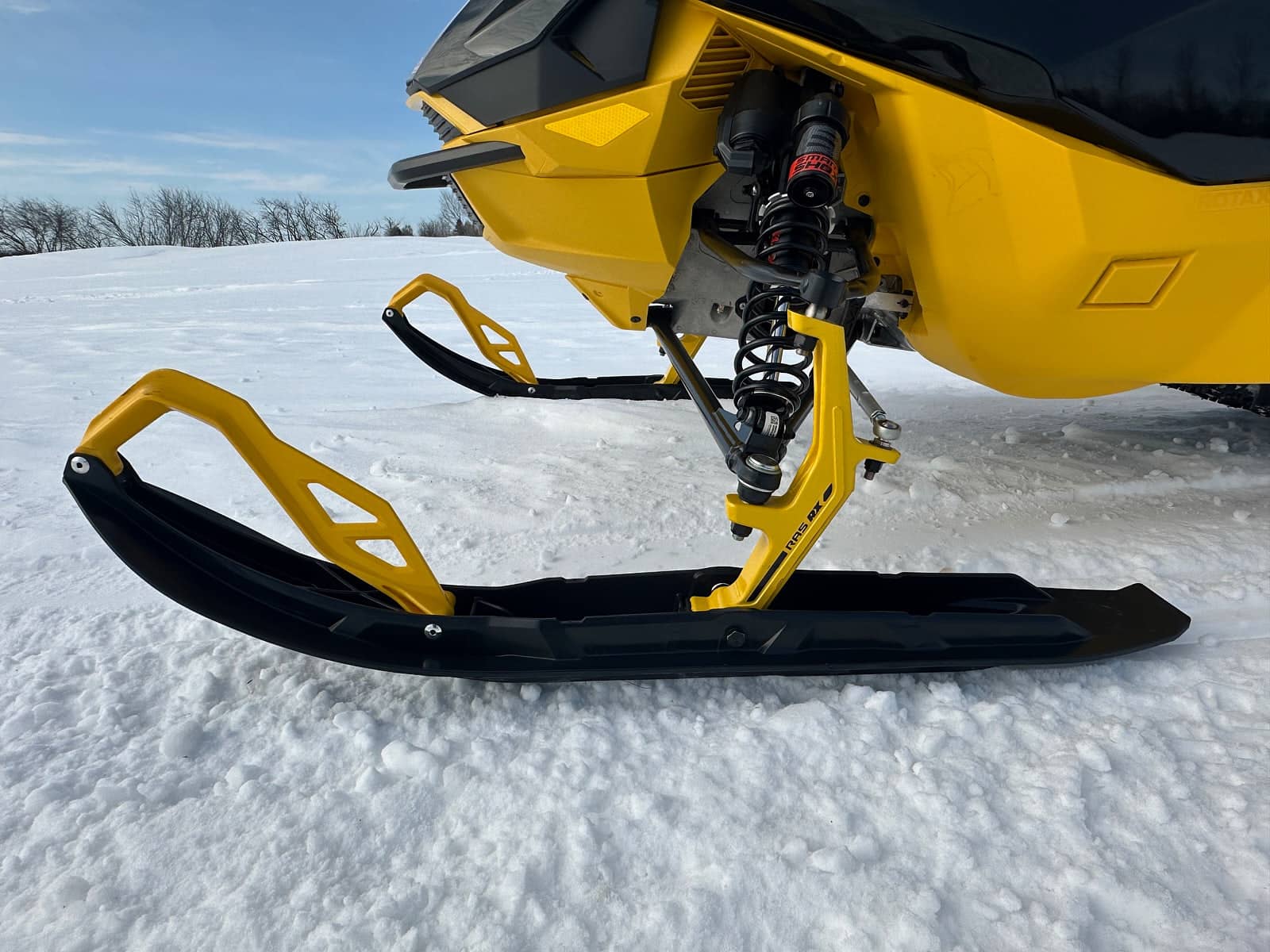
The behaviour of the Pilot RX skis has also been improved, contributing to this increased predictability. In ideal and cold temperatures, their performance surprised me.
The grip was excellent—exceptional at times. Throughout the season, I felt the snowmobile pushed out far less in corners. It provided a general sense of confidence that allowed me to push harder while maintaining control.
These skis definitely helped me maintain good speed while holding my intended line through curves. To compare, in the past I often had to completely let off the throttle in certain situations, and that happened far less this year.
Comparison With the 2025 Polaris Indy VR-1 Boost DYNAMIX
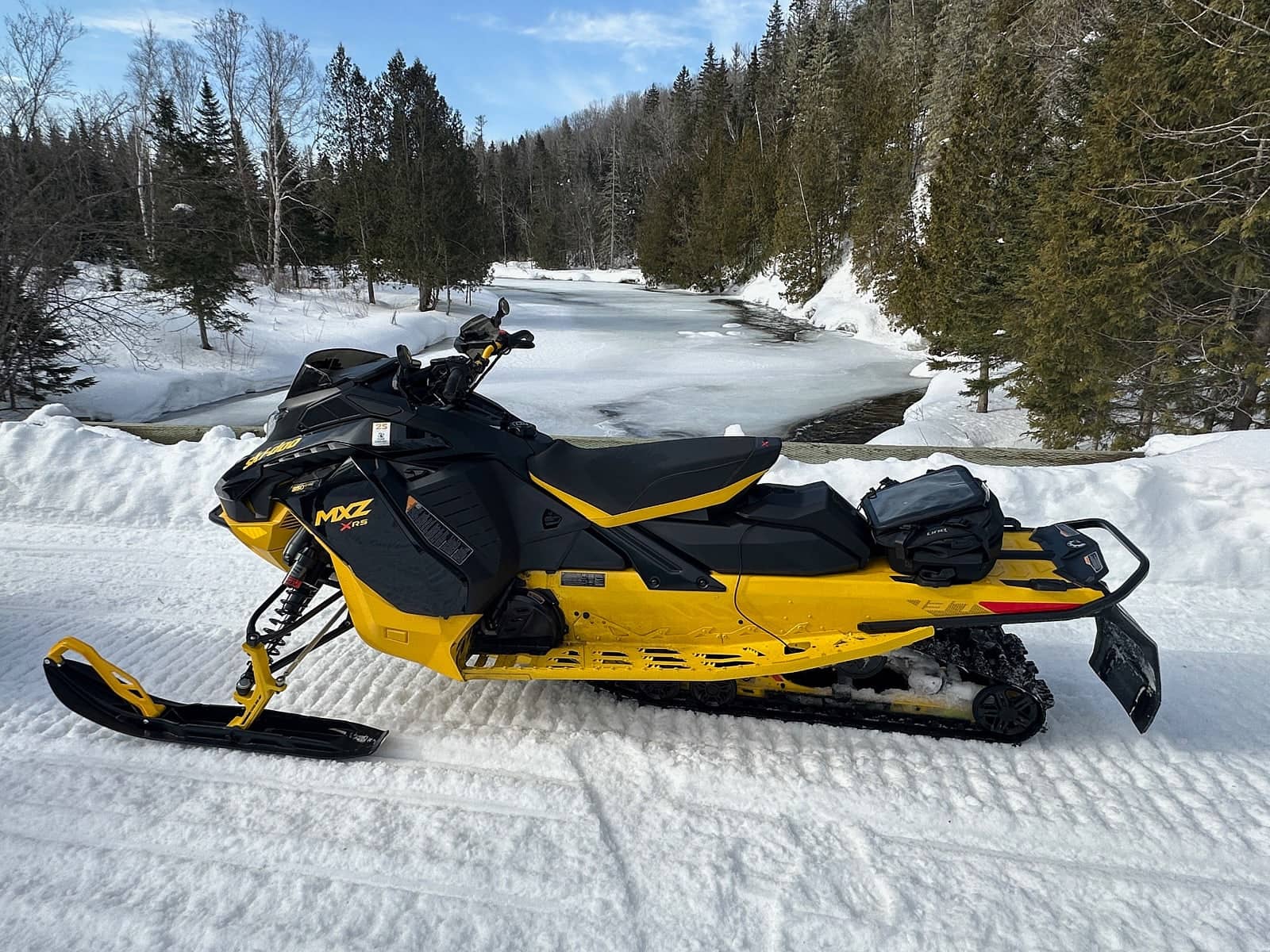
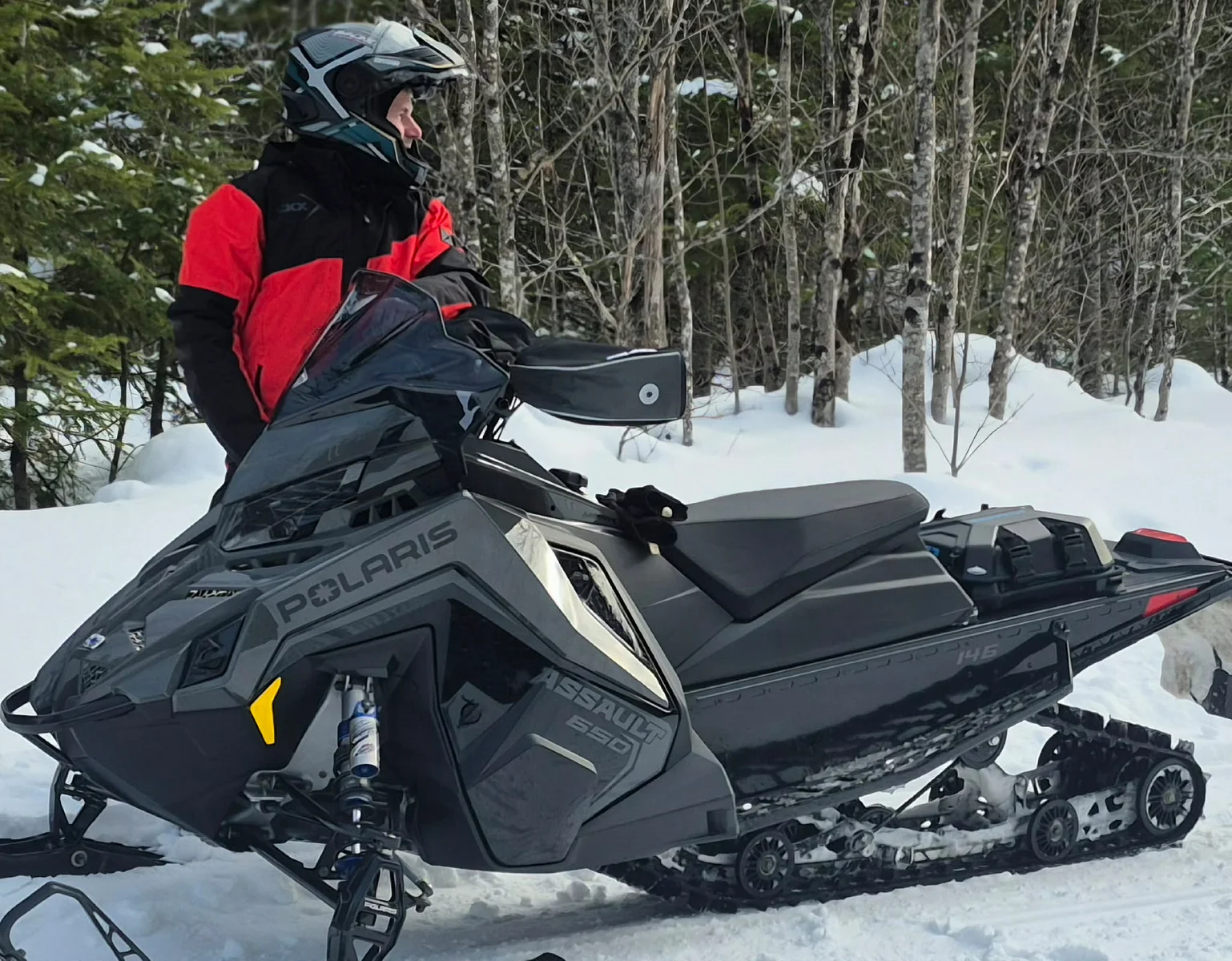
Because of my back injury, I unfortunately wasn’t able to compare both snowmobiles as much as I wanted. I only rode the Polaris for a few short kilometres. That said, temperatures were very mild when I tested both machines. I was surprised by the behaviour of the MXZ X-RS after having ridden him all winter.
I felt the Ski-Doo was getting closer to Polaris-like handling, and even wondered if the front end might actually be better. With such a limited test of the Polaris, I can’t make a firm judgment for now.
Improvements Desired on the MXZ X-RS 2025
For the first time, I was fairly disappointed with the 10.25-inch display. I also had several issues with the screen throughout the winter. I’ll keep my comments brief, as I believe most of these issues were specific to the test vehicle’s display. I’ve never had such problems in previous years since this screen was introduced.
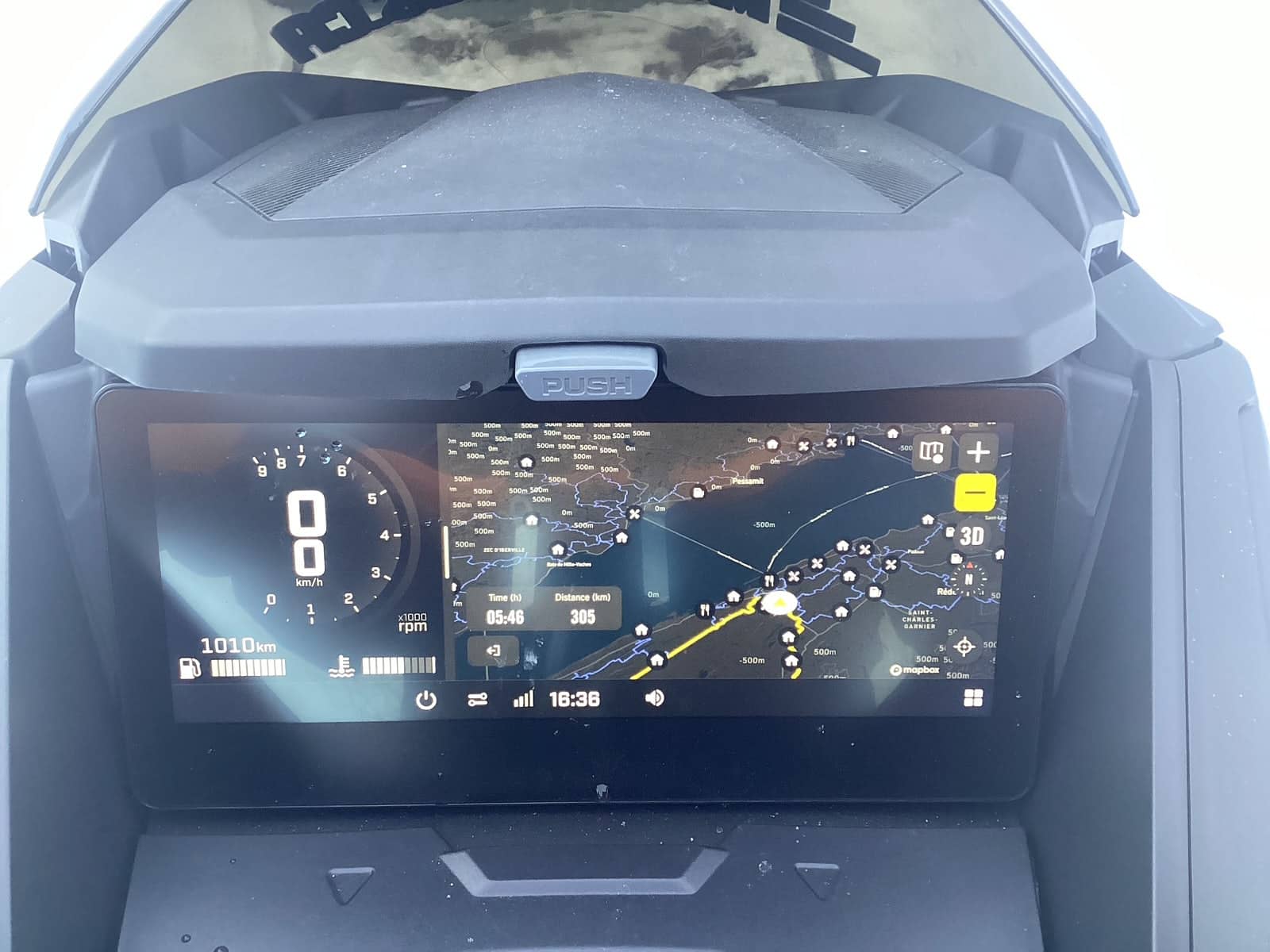
My main disappointment with the screen was that I expected more from the new GPS features. In that sense, I would have preferred delaying its release to deliver something more mature and meaningful. Still, the display provides plenty of information, and I really like the ergonomics and the functionality of the control buttons.
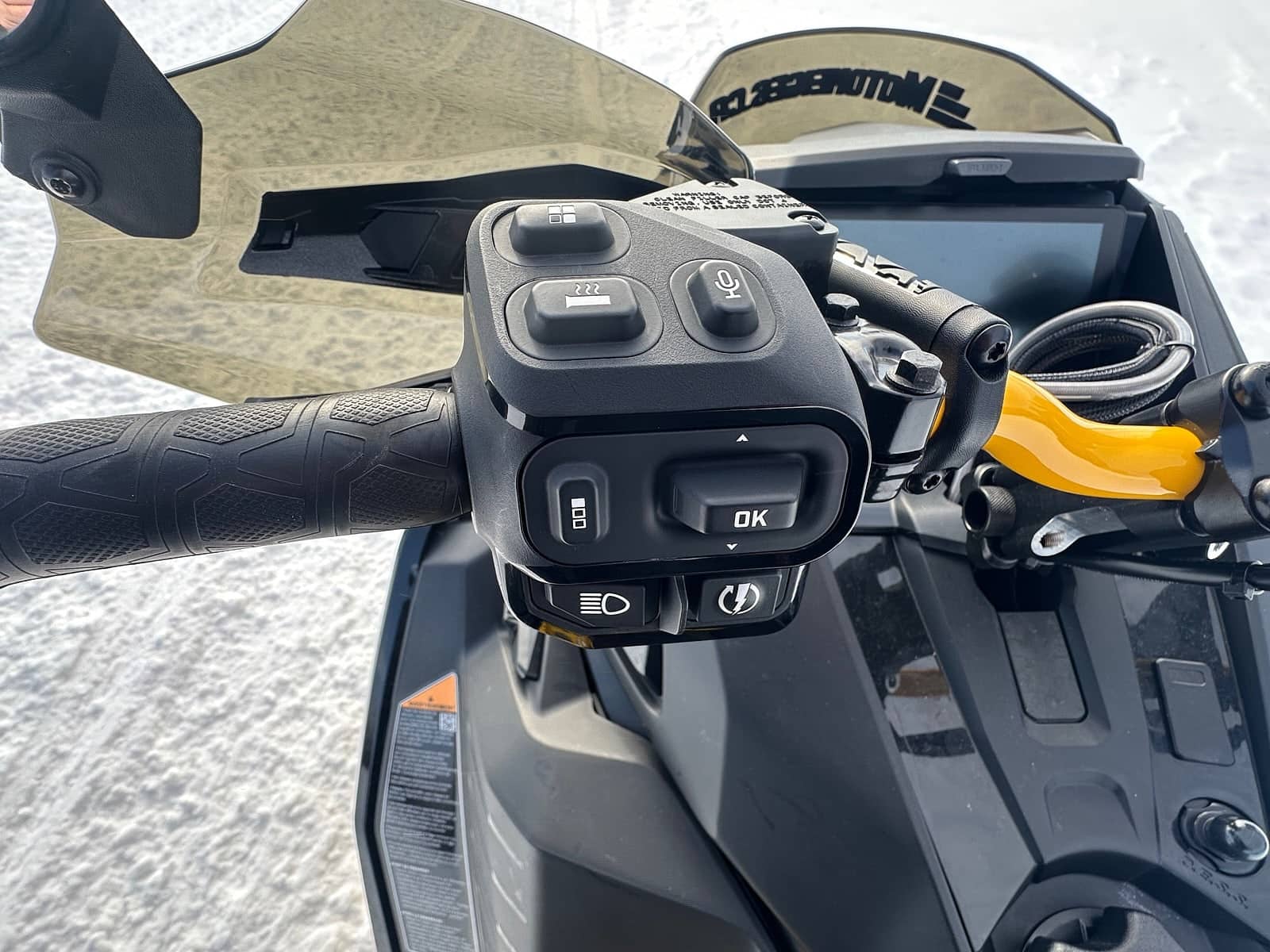
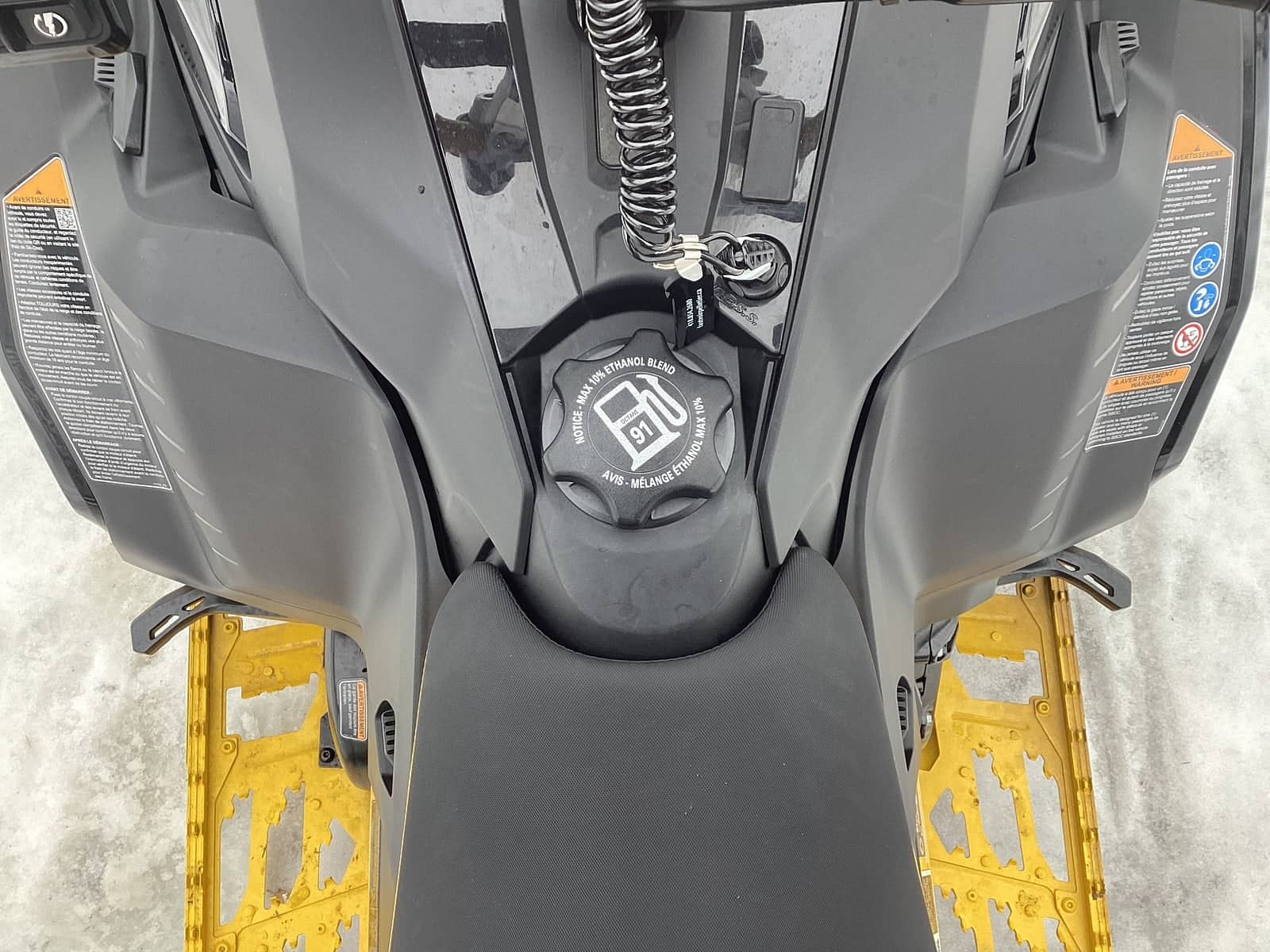
One thing that bothers me is the riding position. It has nothing to do with sitting upright or being comfortable. When riding aggressively, I always end up in the very front portion of the seat, which I find less comfortable. I constantly have to reposition myself. If you look closely at the seat, it slopes slightly upward from rear to front. I think a flatter seat would help.
Additionally, some riders who keep their feet forward while cruising feel that the chain case and brake caliper take up a lot of space on the sides. As a result, you have to keep your legs further apart on the snowmobile, which some people don’t like.
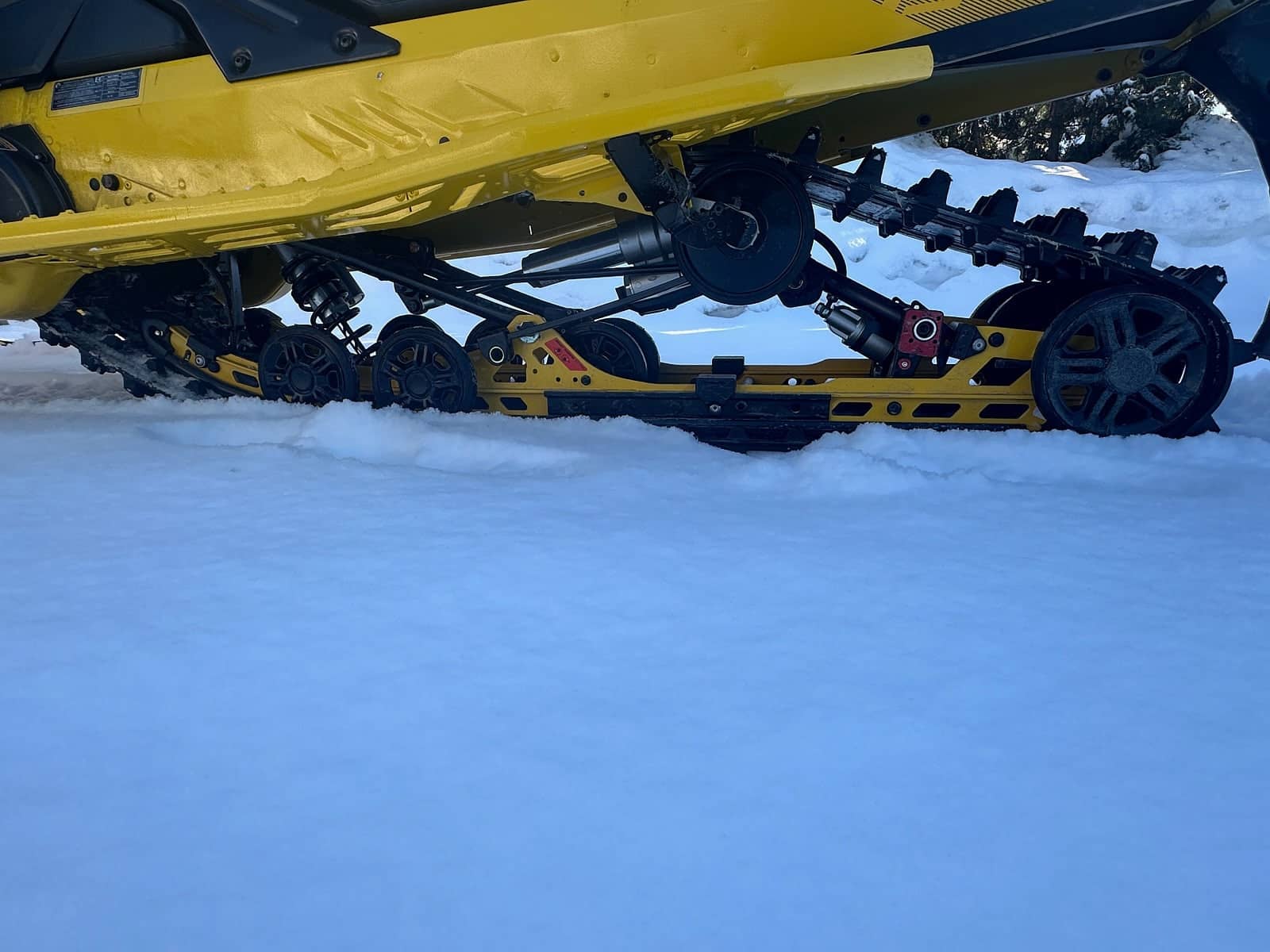
A final improvement I’d like to see is for all Ski-Doo shocks to be controlled by the Smart-Shox system, just like Polaris does on all four shocks with the DYNAMIX system. That said, the rMotion X rear suspension from Ski-Doo performs very well.
Positive Overall Impression of the Ski-Doo MXZ X-RS 2025
Ultimately, the overall behaviour of the 2025 Ski-Doo MXZ X-RS is exactly what I had been hoping for from Ski-Doo for several years—even before the arrival of the REV Gen5 platform. I’ve never enjoyed the handling and behaviour of a Ski-Doo trail snowmobile as much as I did this season. The redesigned front suspension is, in my opinion, a significant and truly important improvement that greatly enhances the ride. A big thank you to Motoneiges.ca and Ski-Doo for allowing me to conduct this test.